
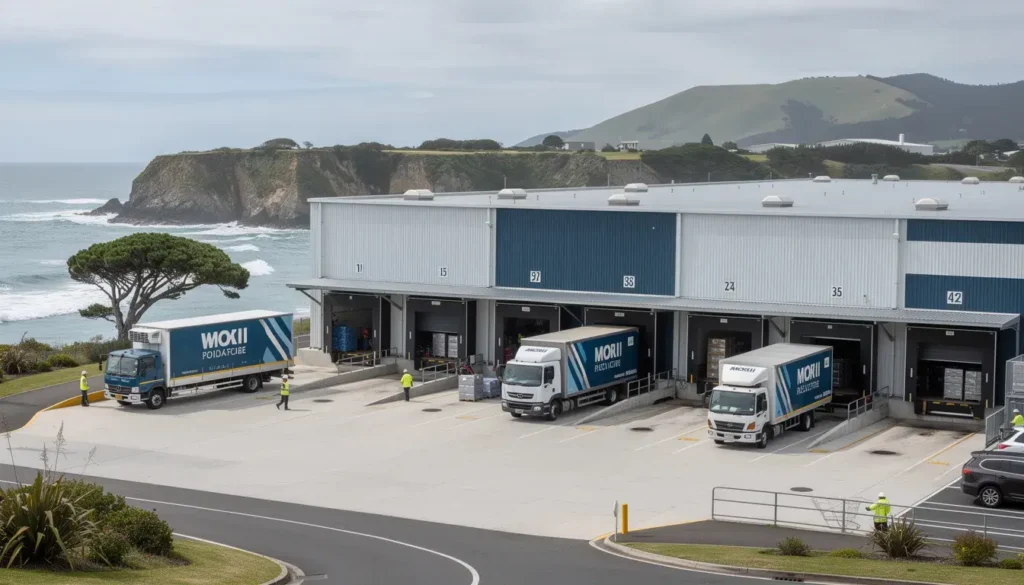
Welcome to our comprehensive guide on industrial electricity cost per kWh in Kapiti. Whether you’re a business owner, facility manager, or simply interested in understanding how electricity pricing works in this region, you’ve come to the right place. Here, you’ll find up-to-date information, practical insights, and valuable tips to help you navigate and manage your electricity expenses effectively. Let’s explore the factors influencing costs and discover ways to optimize your power usage and save money.
Table of Contents
Key Takeaways
- Typical 2026 industrial electricity costs in Kapiti range from 22–34c per kWh all-in, depending on consumption size, with large users (1–5 GWh/year) typically paying 22–28c/kWh and smaller industrial sites (100–500 MWh/year) paying 28–34c/kWh.
- Kapiti industrial users face fundamentally different pricing from residential customers, with bespoke contracts based on annual load size, connection voltage, time-of-use profiles, and power factor performance.
- There is no single “official” industrial cents per kWh figure published specifically for Kapiti; instead, prices must be inferred from MBIE commercial/industrial datasets, retailer tariffs, and Transpower/lines charges.
- Kapiti’s proximity to Wellington and major national grid transmission assets generally keeps industrial tariffs mid-range for New Zealand—not among the very cheapest regions like Canterbury, but more competitive than remote provincial networks.
- The rest of this article explains what shapes an industrial power bill in Kapiti, provides realistic 2026 cost ranges, and outlines how factories, warehouses, and large sites can negotiate better rates.
Industrial Electricity Cost per kWh in Kapiti (2026 Snapshot)
So what is the industrial electricity cost per kWh in Kapiti right now? Based on 2026 data, you’re looking at roughly 22–28c/kWh all-up for large industrial users consuming 1–5 GWh per year, while smaller industrial sites using 100–500 MWh annually typically pay 28–34c/kWh when all charges are included. Very large time-of-use customers running 24/7 operations can push effective rates down to 18–24c/kWh by maximising off-peak consumption.
These figures are indicative estimates derived from MBIE’s commercial/industrial cost series through Q3 2026, adjusted for the local lines company charges and typical retailer margins in the Kapiti region. The national average total electricity prices stood at approximately 39.3c/kWh in late 2026, with the Wellington region (which encompasses Kapiti) averaging around 34.6c/kWh—suggesting Kapiti industrial users generally sit below these broader averages due to their consumption scale and negotiated contracts.
Most Kapiti industrial sites operate on time-of-use or demand-based contracts, meaning their effective cents per kWh varies significantly between periods. Peak hours (typically 7am–11am and 5pm–9pm) can cost more than ten times what you’d pay during off-peak windows (11pm–7am). This structure reflects underlying demand patterns on the network, where residential evening usage creates capacity constraints.
Your actual rates for a site in Paraparaumu, Ōtaki, or Waikanae will depend on your annual consumption band, power factor performance, and whether you’re connected at low or high voltage. A manufacturing plant running three shifts with good load management will see dramatically different unit costs than a warehouse with sharp morning start-up peaks.
How Kapiti Industrial Power Prices Compare to Other NZ Regions
Unlike the well-publicised Quarterly Survey of Domestic Electricity Prices that tracks what households pay across towns and cities, industrial prices in New Zealand remain less visible. However, clear regional patterns still exist, and understanding where Kapiti sits helps you benchmark your costs.
Kapiti’s industrial electricity costs broadly track the Wellington region, often sitting a few cents per kWh above the very lowest national industrial hubs but below higher-cost provincial areas. Here’s how typical large industrial all-in averages compare across regions in 2026:
| Region | Typical Large Industrial Cost (c/kWh) |
|---|---|
| Canterbury/Christchurch | 20–26 |
| Kapiti/Wellington | 22–28 |
| Auckland Central | 24–30 |
| Palmerston North/Manawatū | 23–29 |
| High-cost provincial networks | 26–33 |
| North Shore/Auckland | 25–31 |
The line charge structures in Kapiti—serviced via the Wellington region network and Transpower’s national grid—are more efficient than in remote locations. This helps keep industrial delivery costs moderate compared to areas like parts of Northland (serviced by Top Energy) or the West Coast where sparse customer bases spread infrastructure costs over fewer users.
If you’re considering relocating or expanding production—say, moving from Auckland or looking at sites across the lower North Island—don’t focus solely on cents per kWh. Reliability, capacity availability, and potential network upgrade costs in Kapiti should factor into your decision.
What Makes Up an Industrial Electricity Bill in Kapiti?
Industrial electricity bills have far more components than a simple “cents per kWh” figure, and understanding these helps explain why Kapiti pricing works the way it does. When you receive your power bill, you’re actually paying for multiple distinct services bundled together.
Here’s what makes up your industrial electricity costs in Kapiti:
Wholesale energy cost – The raw commodity price of electricity purchased from generators or the spot market, typically representing 35–50% of your total bill depending on contract structure.
Retail margin – Your electricity retailer’s fee for managing your account, billing, hedging risk, and customer service. This varies significantly between electricity retailers and contract types.
Transmission charges (Transpower) – Fees for using the national grid that connects generation sources to your local network. These are calculated based on regional benefit assessments under the Transmission Pricing Methodology.
Local distribution/lines charges – Payments to the lines company (Electra in Kapiti/Horowhenua) for maintaining and operating the local power lines and substations that deliver electricity to your site. For industrial users consuming over 40,000 kWh annually, Electra’s fixed daily charge sits at approximately $4.12 per connection per day. Metering and industry levies – Charges covering the Electricity Authority, system operator functions, and interval metering services required for time-of-use pricing.
Carbon/ETS pass-through – Some retailers pass through Emissions Trading Scheme costs, particularly relevant as New Zealand’s decarbonisation policies evolve.
For a typical Kapiti industrial user in 2026, network charges (transmission plus distribution combined) account for roughly 35–55% of the delivered price, with energy and retail margin covering the remainder. Larger customers on higher-voltage connections with good power factor performance often see lower network charges per kWh than smaller workshops or light industrial units on low-voltage feeders.
Lines vs Energy Component for Kapiti Industrial Users
Similar to domestic tariffs, industrial prices in Kapiti can be thought of as “energy component + lines component”—but with considerably more granular structures. While your home might see a simple per kWh rate, industrial sites often face demand charges calculated in dollars per kVA or kW per month, making the conversion to effective cents per kWh less straightforward.
For Kapiti industrial users in 2026, here are indicative ranges:
Energy component: 10–16c/kWh depending on contract term, wholesale hedging approach, and time-of-use profile. Fixed term contract arrangements of 2–3 years typically secure lower rates than rolling monthly agreements. Prompt payment discounts can shave another 1–2% off.
Lines component: 8–14c/kWh equivalent when demand and daily fixed charges are converted to cents per kWh at typical load factors. This varies significantly based on your consumption pattern and connection characteristics.
Peak demand charges deserve special attention. Many Kapiti industrial tariffs include a capacity or anytime-maximum-demand charge that can significantly raise your effective cents per kWh if your site has sharp load spikes. For example, Electra’s time-of-use structure shows peak rates exceeding $0.10/kWh compared to off-peak rates around $0.01/kWh—a tenfold difference.
Here’s the opportunity: reducing coincident demand with regional peaks can cut your lines component substantially. Moving process loads to overnight periods (11pm–7am) where rates drop to less than 1c/kWh on the network portion can deliver 20–30% savings on your annual bill, even if your energy rate per kWh stays similar.
Power factor penalties add another layer. If your site runs below 0.95 lagging power factor (common with inductive loads like motors), you may face a 2% multiplier on network charges for every 0.01 shortfall. A power factor of 0.90 could inflate your lines charges by 10%—money that proper capacitor correction could save.
Current Trends and Outlook for Kapiti Industrial Electricity Costs (2026–2030)
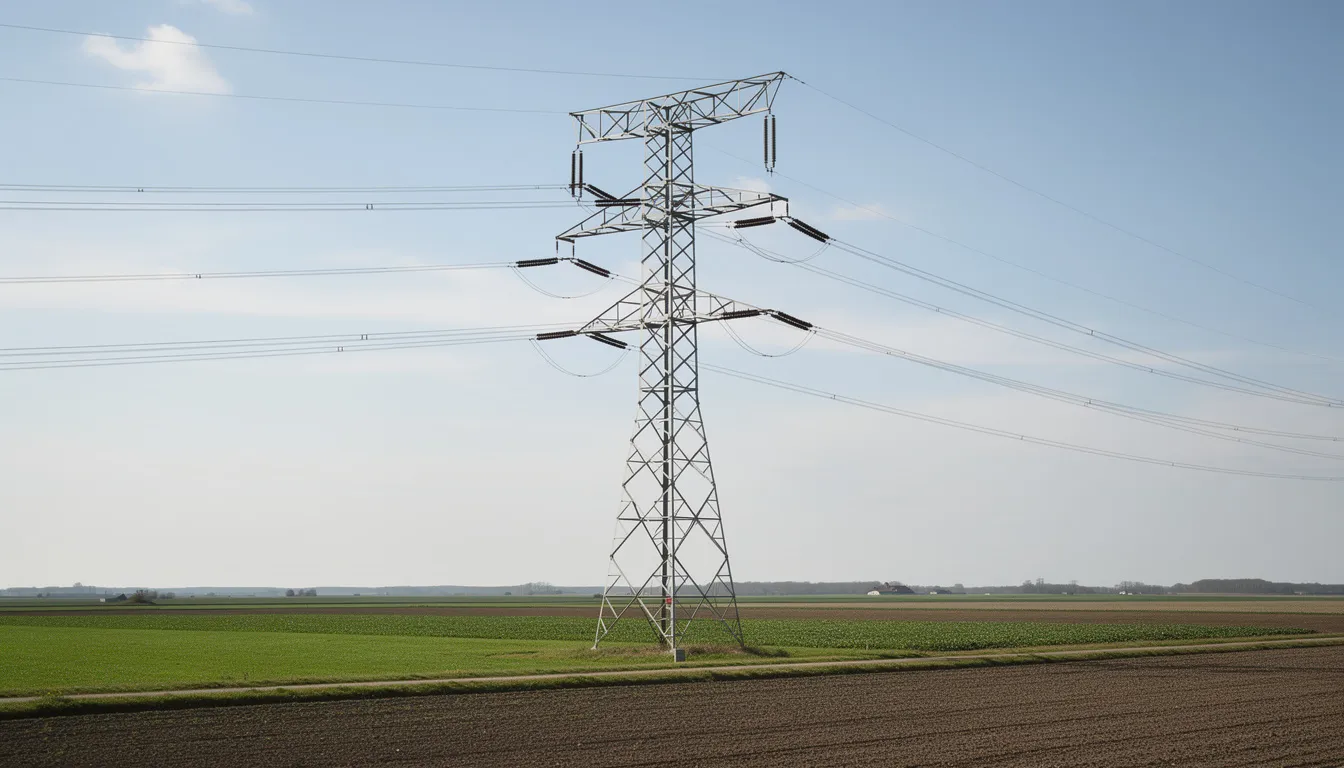
Industrial electricity prices in Kapiti, like the rest of New Zealand, have been rising in real terms since around 2021. This reflects transmission upgrades, distribution infrastructure investment, and higher generation input costs following periods of low hydro lake levels and gas shortages that spiked wholesale prices 20–50% in 2024.
Several regulatory and market drivers will shape 2026–2030 pricing:
Commerce Commission price paths – The Commission’s 2023–2026 default price-quality determinations set revenue allowances for electricity distribution businesses, including Electra. These decisions directly influence how much your lines company can recover through charges, with allowances for network investment creating upward pressure.
Transpower grid programmes – Upgrades serving the Wellington/Kapiti corridor, including resilience improvements, flow through as higher transmission charges. The Transmission Pricing Methodology has also shifted cost allocation, with some commercial and industrial users in certain zones seeing disproportionate increases.
National decarbonisation policies – Electrification of transport, process heat, and buildings is increasing electricity demand across the country. This supports wholesale prices and requires ongoing generation and network investment.
Wholesale market dynamics – The Upper North Island has seen daily average spot prices around 37c/kWh in late 2026, though Kapiti typically benefits from slightly lower Wellington region prices. The interplay between hydro generation, gas availability, and winter demand creates ongoing volatility.
A realistic expectation is that Kapiti industrial users may see average annual increases in total electricity spend of 3–7% per year through to 2030, depending on load growth, retailer selection, and contract timing. However, individual outcomes vary widely—some businesses locked in favourable contracts in 2023–24 are now seeing the benefits, while others are exposed to current market rates.
Review your contracts well ahead of renewal dates—ideally 6–12 months prior. This gives you negotiating leverage and time to hedge against adverse wholesale price cycles.
How Kapiti Industrial Users Can Reduce Their Cents per kWh
If you’re running a factory in Paraparaumu, a food processing operation in Ōtaki, or logistics facilities across Kapiti, there are proven strategies to lower your effective electricity cost per kWh.
Negotiation Strategies
Aggregate sites – If you operate multiple sites across Kapiti and Wellington, bundle them into a single tender process. Electricity retailers offer better rates for larger total volumes, and you gain negotiating leverage.
Time your contracts – Watch wholesale futures markets. When forward prices soften, lock in multi-year fixed term contract arrangements. The data shows 20–30% swings between contract cycles, so timing matters.
Request structured TOU tariffs – If your operations can flex around peak periods, demand a tariff that rewards off-peak consumption. The difference between paying 10c/kWh at 2am versus 25c/kWh at 6pm is substantial.
Shop around – Don’t assume your current power company offers the best deal. Get competing quotes from multiple electricity retailers every contract cycle.
Technical Measures
Power factor correction – Install capacitors or synchronous motors to maintain power factor above 0.95. This avoids network penalties that can inflate bills by 10% or more.
Interval metering and monitoring – Modern meters provide half-hourly consumption data. Use this to identify avoidable peak demand spikes and track how much electricity you’re actually using when.
Load shifting – Move batch processes like chilling, pumping, or EV fleet charging to shoulder or night periods. Food processing plants in the Horowhenua region have achieved 80% savings on network variable costs by running chillers during off-peak windows.
Operational Tactics
Stagger start-ups – Don’t fire up all heavy machinery simultaneously in your Ōtaki or Paraparaumu plant. Spread motor starts over 15–30 minutes to avoid creating a new monthly peak demand reading.
Review ancillary loads – Compressed air systems, HVAC, and refrigeration often run inefficiently. Energy audits frequently identify 10–20% savings opportunities that pay back within 1–2 years.
Consider heat pump technology – For process heating or space conditioning, modern heat pump systems can deliver 3–4 units of heat per unit of electricity, dramatically reducing energy consumption compared to resistive heating.
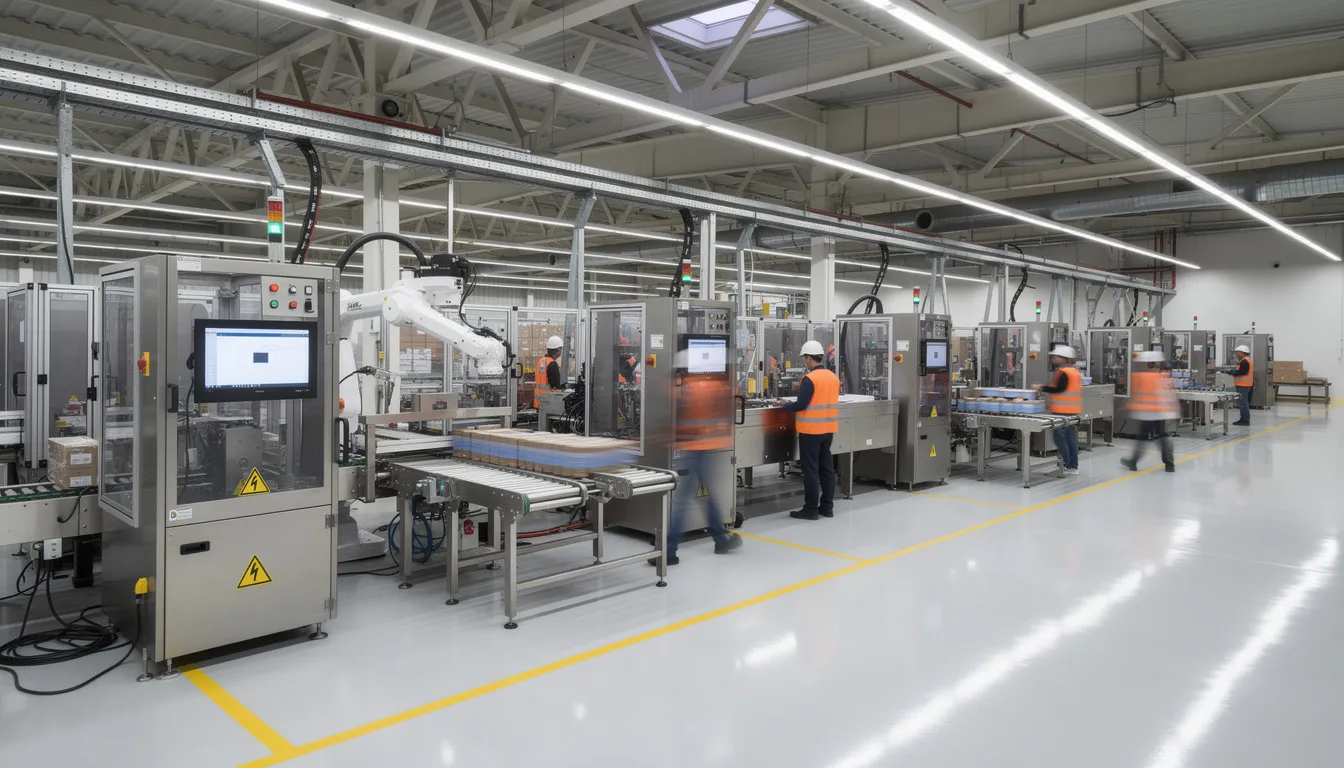
Benchmark your costs periodically against MBIE commercial/industrial cost series and Wellington region reference data. If your effective rate looks high for your site’s size and profile, it’s time to renegotiate.
Using MBIE and Regional Data to Benchmark Kapiti Industrial Prices
While the Quarterly Survey of Domestic Electricity Prices (often called the QSDEP) targets households and compares domestic electricity prices across New Zealand towns and cities, MBIE also publishes sales-based electricity cost data for commercial and industrial sectors. This data serves as a useful benchmark for Kapiti users.
How the Data Works
MBIE’s sales-based methodology calculates average realised prices by dividing total revenue (in dollars) by kWh sold. This gives an effective cents per kWh figure for industrial customers nationally and by broad region. While it doesn’t isolate Kapiti specifically, the Wellington region figures provide a reasonable proxy.
The figures capture all revenue—including fixed charges, demand charges, and energy rates—converted into a single per kWh average. This makes them useful for comparing your own blended costs against the market.
How to Use MBIE Data
- Download the latest MBIE “Prices” data tables (available in XLSX format from the MBIE energy statistics pages)
- Navigate to the commercial/industrial rows for the Wellington region
- Compare against your own effective cents per kWh (calculate by dividing total quarterly spend by total kWh consumed)
Interpreting the Numbers
Exercise caution when interpreting quarterly movements. Several factors can distort short-term averages:
- Timing of line charge resets (often 1 April each year)
- Seasonal demand changes (winter vs summer profiles)
- One-off credits or catch-up charges from retailers
- Wholesale price volatility flowing through to spot-exposed customers
Use rolling 12-month averages rather than single-quarter snapshots. This smooths out seasonal effects and provides a more reliable comparison for your Kapiti plant’s performance.
For context, national average industrial prices have trended upward 5–10% annually since 2020, driven by the renewables transition costs and network investment. If your costs are rising faster than this, investigate whether your contract terms, demand profile, or load management could be improved.
The cheapest low user tariff for households isn’t relevant to industrial pricing, but understanding the broader market helps. The same cost pressures affecting residential customers—rising lines charges, transmission costs, and wholesale energy prices—ultimately flow through to commercial and industrial bills too.
Frequently Asked Questions – Industrial Electricity Cost per kWh in Kapiti
Is there an official industrial cents-per-kWh figure published just for Kapiti?
No. MBIE and the Electricity Authority do not publish a dedicated “Kapiti industrial price” series. Instead, Kapiti is generally captured within wider Wellington region or national commercial/industrial datasets. To understand your local costs, you’ll need to infer from regional data and compare against actual retailer quotes for your specific site and consumption profile.
Why might my Kapiti factory pay a different rate from a similar-sized site in Wellington city?
Several factors create these differences. Your specific network tariff category, the timing of your contract negotiation, your load profile (day vs night usage distribution), power factor performance, and whether you’ve invested in demand management all influence your effective rate. Even two sites on the same broader network can see 10–20% cost differences based on these variables.
Can a Kapiti industrial user switch lines companies to lower costs?
No. Lines companies operate as geographic monopolies—Electra serves Kapiti and Horowhenua, and you cannot choose a different distribution business. Your savings opportunities come from retailer selection, contract structure, demand management, power factor correction, and operational efficiency improvements rather than changing your lines company.
How much electricity use makes a business “industrial” in Kapiti pricing terms?
There’s no single legal threshold, but in practice many retailers and lines companies treat sites using more than roughly 100,000–150,000 kWh per year (or with three-phase/higher-voltage connections) as commercial/industrial. These sites receive bespoke time-of-use or demand-based tariffs rather than simple residential-style plans. Electra’s dedicated industrial tariffs kick in for customers exceeding 40,000 kWh annually.
Are Kapiti industrial users exposed to spot price volatility?
It depends entirely on your contract type. Some Kapiti firms operate on fixed-price, fixed term contract arrangements that insulate them from daily wholesale swings—providing budget certainty but potentially missing out when spot prices drop. Others choose spot-exposed or hybrid products to chase lower average costs, accepting greater risk in exchange for potential savings. Understand your business’s appetite for energy price risk before agreeing to spot-linked deals, particularly given that 2024 saw spot prices spike 20–50% during supply shortages.
Why are electricity prices increasing in New Zealand?
Electricity prices in New Zealand are rising mainly due to higher transmission and line charges approved by the Commerce Commission. From 1 April 2026, many lines companies were allowed revenue increases of up to 21% to fund grid upgrades and infrastructure investment. These costs are passed on to consumers through higher power bills.
How much are electricity prices expected to rise?
Electricity prices are expected to rise considerably over the next five years. For many households, average monthly power bills are increasing by between $11.50 and $28.75, depending on the local lines company and region.
What is the average electricity price in New Zealand?
The average electricity price for a typical New Zealand household using around 8,000 kWh per year is approximately 35.67 cents per kWh, although this varies significantly by region.
Why does electricity cost vary so much by region?
Electricity prices vary by region mainly due to differences in line charges, local distribution costs, infrastructure investment, and retailer pricing. In New Zealand, electricity prices can differ by more than 10 cents per kWh between the cheapest and most expensive regions.
Which regions have the cheapest and most expensive electricity?
Wellington is among the cheapest regions at around 34.61c per kWh, while Balclutha is one of the most expensive at approximately 48.93c per kWh. These differences are largely driven by regional line charges and distribution costs.
How much do line charges affect electricity prices?
Line charges are a major part of electricity costs and vary significantly by region. For example, Cromwell has one of the highest line charges at 20.51c per kWh, while Nelson has one of the lowest at 8.49c per kWh.
What makes up the total cost of electricity?
The total cost of electricity is made up of two main components:
- Energy costs – the electricity you consume
- Line charges – the cost of delivering electricity through the network
Both components significantly impact your final power bill.
What is the QSDEP and why is it important?
The QSDEP (Quarterly Survey of Domestic Electricity Prices) provides a consistent benchmark for comparing electricity prices across New Zealand. It reports average prices based on a typical household’s usage, making it easier to compare regions and trends.
How does the removal of the low-user tariff affect power bills?
The scrapping of the low-user electricity tariff has contributed to rising power bills, particularly for households that previously benefited from lower fixed charges.
How can households reduce their electricity bills?
Households can reduce electricity costs by:
- Using energy-efficient appliances
- Shifting usage to off-peak hours
- Comparing electricity plans regularly
- Understanding how energy and line charges affect their bill
Who manages electricity distribution in the Kāpiti Coast?
Electricity distribution in the Kāpiti Coast is managed by Electra, which controls local network pricing and infrastructure investment.
What affects electricity prices in the Kāpiti region?
Electricity prices in Kāpiti are influenced by:
- Electra’s network charges
- Infrastructure upgrades
- Wholesale electricity market conditions
- Retailer pricing and discounts
- Energy usage patterns
Are electricity prices in Kāpiti high compared to other regions?
Electricity prices in Kāpiti are generally competitive compared to other regions in New Zealand and are typically lower than places such as Kerikeri and Westport.
What are typical residential electricity prices in Kāpiti?
The total retail cost of electricity in Kāpiti varies by retailer and plan, but is influenced by both energy costs and Electra’s line charges. Actual bills may differ from averages depending on usage and discounts.
What do small businesses pay for electricity in Kāpiti?
As of January 2026, small businesses using 10–50 MWh per year in the Kāpiti region typically pay 20–25c per kWh for industrial electricity rates.
What are electricity costs for medium businesses in Kāpiti?
Medium businesses using 50–200 MWh per year typically pay 18–22c per kWh as of January 2026.
What do large businesses pay for electricity in Kāpiti?
Large businesses using 200+ MWh per year generally pay 15–20c per kWh for industrial electricity in the Kāpiti region.
What is the average industrial electricity cost in Kāpiti?
Industrial electricity costs in Kāpiti typically range between 15c and 20c per kWh, depending on business size, retailer.
Do commercial customers face additional charges?
Yes. Electra applies a power factor premium for commercial and industrial customers with a power factor below 0.95. This results in a 2% surcharge on the network price for every 0.01 below 0.95.
How do wholesale electricity prices affect Kāpiti?
Wholesale spot prices in the Lower North Island, including Kāpiti, were exceptionally low in January 2026, ranging from $0.01 to $0.03 per MWh. However, retail prices are still heavily influenced by line charges and network costs.
Does Electra offer any discounts?
Electra historically offers a pricing discount. For 2026 and 2027, this includes a variable component of approximately $0.0073 per kWh for consumers.
Why should businesses compare electricity plans?
Comparing electricity plans helps businesses:
- Secure better energy rates
- Reduce exposure to line charge increases
- Avoid unnecessary power factor penalties
- Match plans to usage patterns
Conclusion
Understanding the industrial electricity cost per kWh in Kapiti is crucial for businesses aiming to manage their energy expenses effectively. With typical rates ranging from 15 to 34 cents per kWh depending on consumption size and contract terms, Kapiti offers competitive pricing compared to other New Zealand regions. However, factors such as power factor performance, time-of-use tariffs, and line charges significantly influence the final cost.
Electricity prices in Kapiti are shaped by a combination of wholesale energy costs, retailer margins, transmission fees, and local distribution charges managed by Electra. While the region benefits from proximity to major grid infrastructure, ongoing infrastructure investments and regulatory decisions, including Commerce Commission price paths, are expected to drive price increases over the coming years.
Businesses in Kapiti can reduce their electricity costs by negotiating favorable contracts, optimizing load profiles to benefit from off-peak rates, correcting power factor issues, and regularly benchmarking their rates against regional data. Staying informed about market trends and actively managing electricity usage will be key to controlling power bills amid rising prices.
For industrial consumers, understanding the detailed components of their electricity bills and leveraging available strategies can lead to significant savings and improved operational efficiency. By comparing power plans and working closely with electricity retailers, Kapiti businesses can secure better deals and adapt to the evolving energy landscape.
In summary, while electricity costs in Kapiti are influenced by various dynamic factors, proactive management and informed decision-making empower industrial users to optimize their energy expenses and maintain competitiveness in the New Zealand market.